
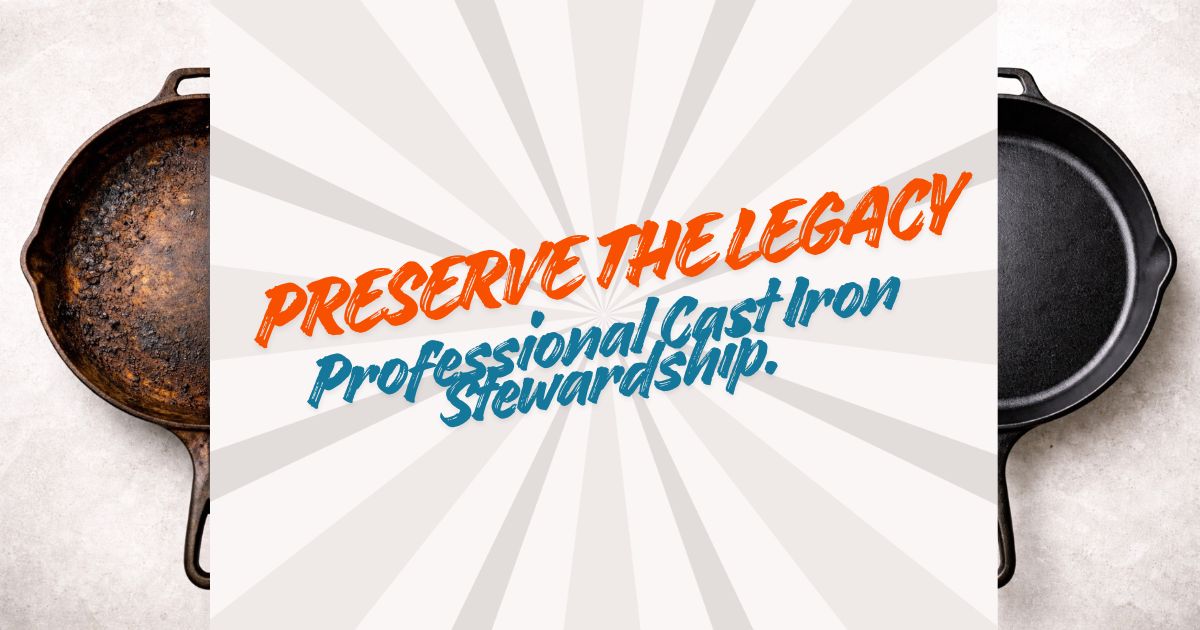
Cast Iron Maintenance Hub
Cast iron isn't fragile—it’s practically immortal. The difference between a rough, rusty pan and a slick, pitch-black non-stick heirloom isn’t the price tag; it’s the method. Welcome to the definitive guide to cast iron stewardship. Whether you are daily-driving a premium skillet or rescuing a neglected family treasure, this structured curriculum bridges the gap between material science and kitchen performance.
Daily Care Protocol: How to Wash
Let it Cool: Always let your pan cool to a manageable temperature before washing to prevent thermal shock (warping or cracking).
Gentle Cleansing: Use warm water, a few drops of mild dish soap, and a non-abrasive sponge or a stiff nylon brush.
The Chainmail Crux: For stubborn, charred food particles, use a stainless steel chainmail scrubber. The rounded rings gently lift debris without scratching your smooth base layer of seasoning.
The Core Rule: How to Dry
Water is cast iron's primary catalyst for rust. Never leave your cookware to air-dry in a rack, never let it soak in the sink, and never put it in a dishwasher.
The Dehydration Method
Towel Dry: Immediately after rinsing, wipe down every surface of the pan (including the bottom and handle) with a clean towel.
Thermal Evaporation: Place the pan onto a stovetop burner over low-to-medium heat for 2 to 3 minutes. The heat will draw out any microscopic moisture trapped in the porous iron, leaving it bone-dry.
The Finish: How to Oil (Conditioning)
Apply the Micro-Layer: While the pan is still warm from the stove, apply a tiny drop (less than a teaspoon) of high-smoke-point oil (like canola, grapeseed, or specialized seasoning paste).
Buff it Out: Using a clean paper towel, rub the oil over the entire pan—inside, outside, and the handle.
The Matte Finish: Take a second, dry paper towel and buff the pan until it looks completely dry and matte. If it looks shiny, wet, or sticky, there is too much oil left on the surface.
Kitchen Prep: Preheating Before Use
Cast iron holds heat like a champion, but it conducts heat slowly, causing hot spots if rushed. Dropping food into cold iron causes instant sticking.
The Preheating Method
Start Early: Place your oiled skillet on the burner over low-to-medium heat for 5 to 10 minutes before you intend to cook.
Test the Radiance: Hover your hand an inch above the cooking surface. Once you feel even, radiating heat across the entire width of the pan, add your cooking fat, let it shimmer, and introduce your ingredients.
The Restoration Lab: Rescuing Rusted Iron
If a pan is left wet and develops an orange coat of rust, it is never a lost cause. Because cast iron is a solid piece of metal, rust is merely a surface condition that can be stripped and rebuilt.
1.Strip the Rust:Phase 1: Elimination.
Take fine steel wool, warm water, and gentle dish soap. Scrub the affected zones vigorously until all orange rust is completely gone, exposing the raw, gray iron underneath.
2.Thermal Dehydration:Phase 2: Prep.
Wipe the pan completely dry with a cloth. Heat it on a stovetop burner over medium heat for 3 minutes to guarantee all moisture has evaporated from the newly exposed metal.
3.Apply the Base Oil:Phase 3: Coating.
Apply a small drop of grapeseed or canola oil. Rub it thoroughly over the entire surface (interior, exterior, and handle). Buff it hard with a clean paper towel until the pan looks completely matte, not slick.
4.Oven Polymerization:Phase 4: Curing.
Place the cookware upside down in an oven preheated to 450°F (230°C). Put a sheet of aluminum foil on the bottom rack to catch any stray drips. Bake for 1 hour, then turn off the oven and let it cool completely inside.